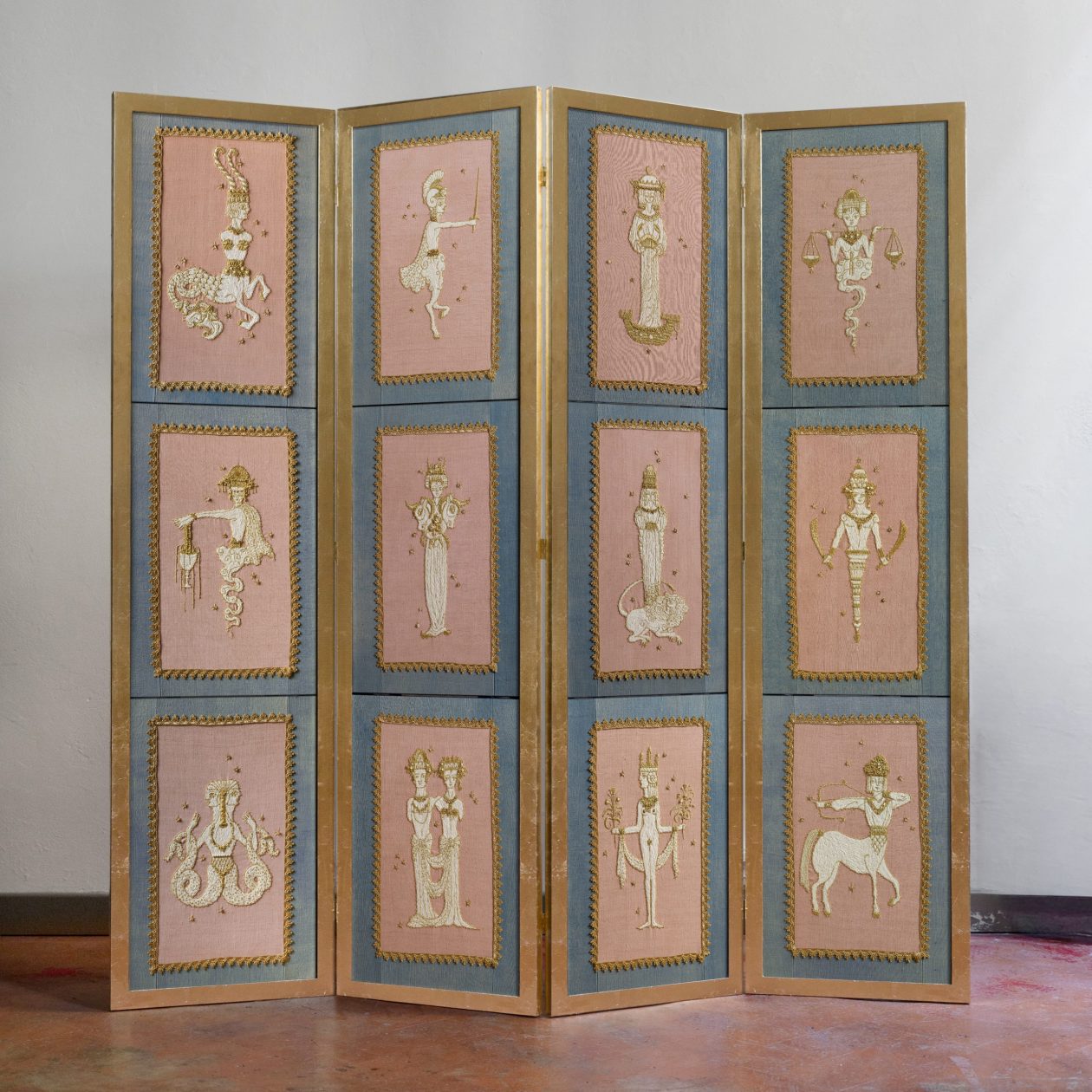
I dodici pannelli si presentano come una sovrapposizione di tessuti; la base è un cotone tessuto dalla nonna dell’artista per la sua dote nel 1939, tinto a mano in rosa antico, le cornici sono realizzate in canapa vintage grezza dell’aviazione militare italiana dipinta a mano in celeste carta da zucchero.
I colori e le tinture sono stati realizzati da Laura e Valentina Fiorini nell’atelier Ratafià di Firenze.
Sulle basi così assemblate sono stati realizzati i dodici segni zodiacali su disegno originale dell’artista.
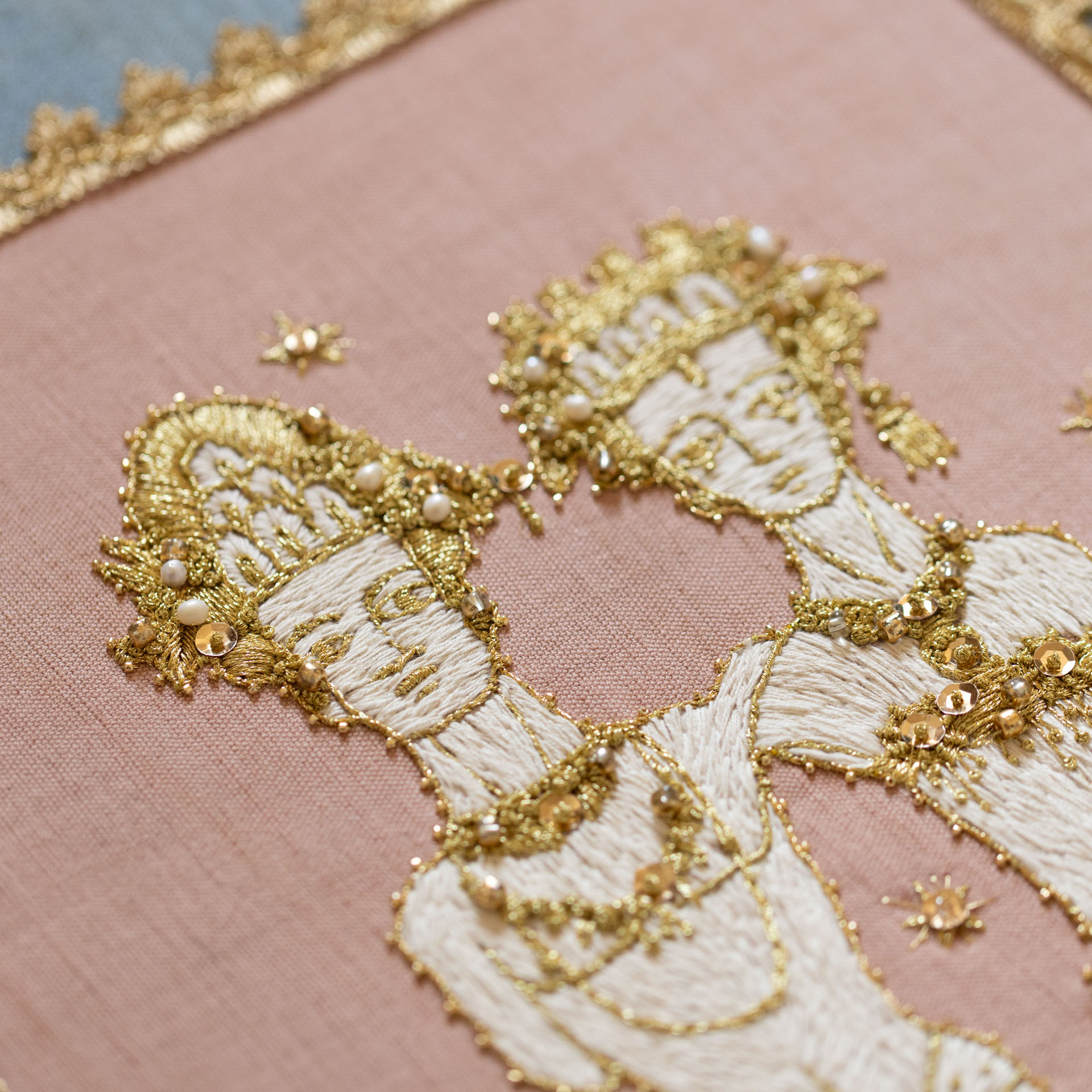
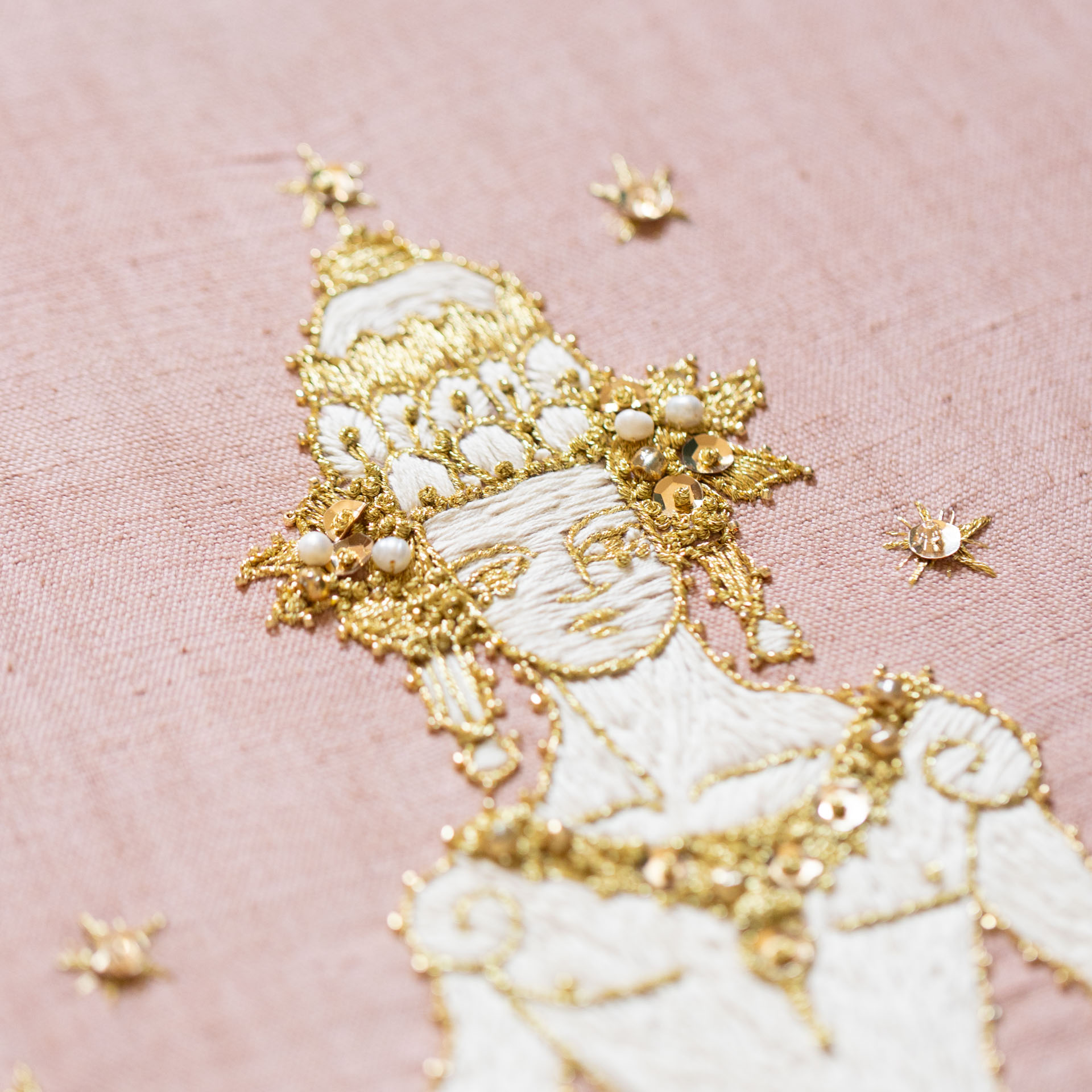
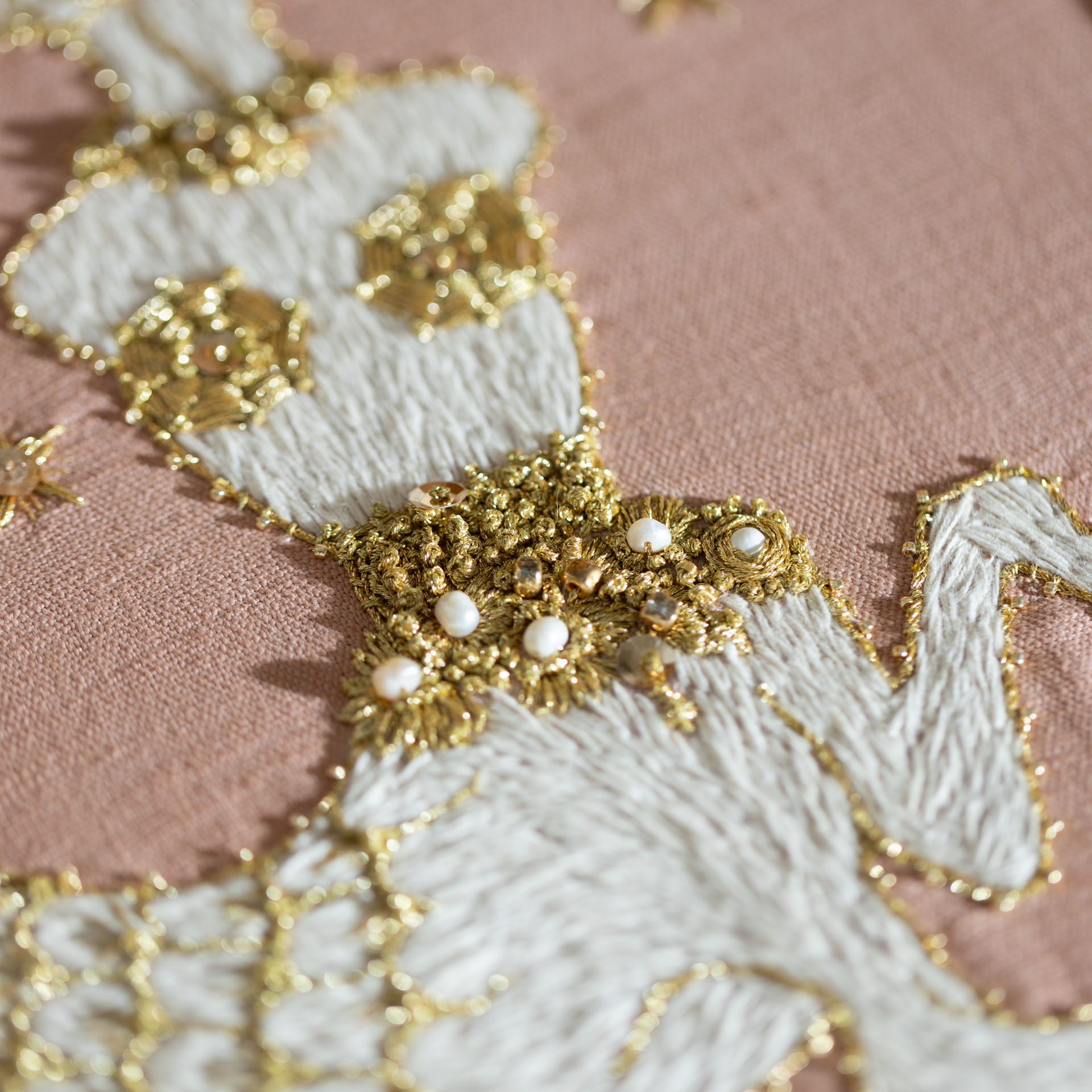
Ricamati interamente a mano con cordoncino e filo di lurex oro, riempiti con filo da Imbastire di cotone bianco, i soggetti sono eseguiti con un mix di punti interpretati liberamente: punto cordoncino, punto pittura monocolore, punto piatto, punto pieno, punto catenella, nodi francesi e spina di pesce. Il tutto bordato ed arricchito da paillettes dorate, micro perle di vetro e perle di fiume.
The twelve panels are composed as layered textiles. Their foundation is cotton woven by the artist’s grandmother in 1939 as part of her wedding trousseau, hand-dyed in an antique rose hue. The frames are made from raw vintage hemp canvas originally used by the Italian Military Air Force, hand-painted in a soft powder blue.
The colours and dyes were developed by Laura and Valentina Fiorini at the Ratafià atelier in Florence.
Upon these carefully assembled textile grounds, the artist created the twelve signs of the zodiac from her original drawings.
Each sign is entirely hand-embroidered using gold Lurex cord and thread, with white cotton basting thread used as padding. The embroidery combines a variety of stitches, interpreted freely by the artist, including couching, monochrome long-and-short stitch, satin stitch, padded satin stitch, chain stitch, French knots, and fishbone stitch. Each panel is further embellished with gold sequins, tiny glass beads, and freshwater pearls.
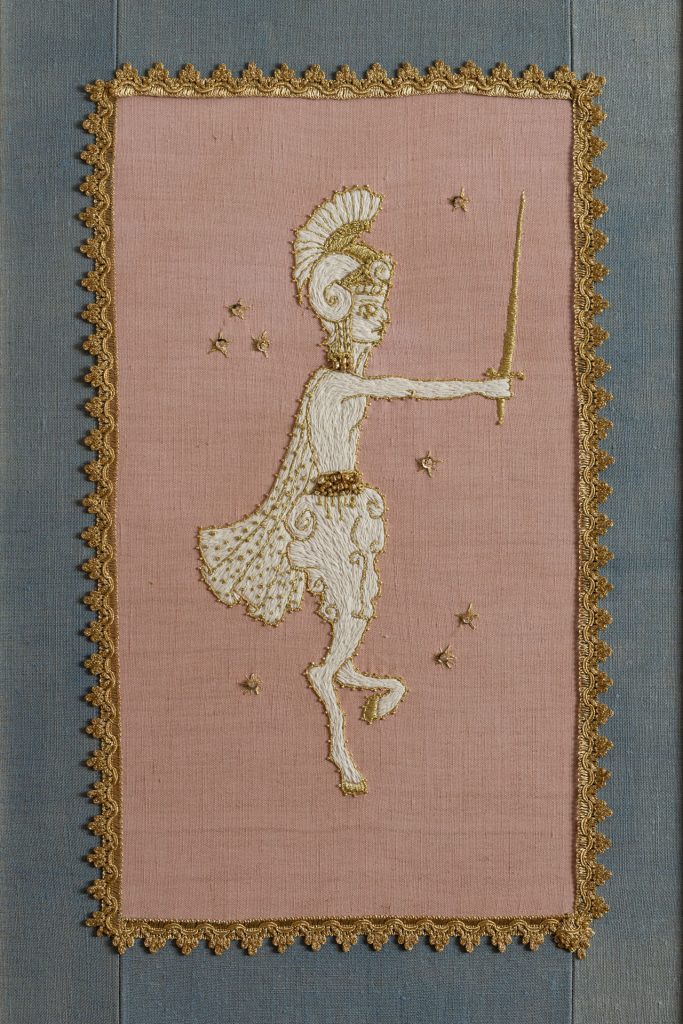
L’Ariete , elemento fuoco, è attivo, avvia con vigore l’anno naturale; la spada brandita dal guerriero con l’elmo di montone ricalca lo sforzo verticale dei germogli marzuoli.
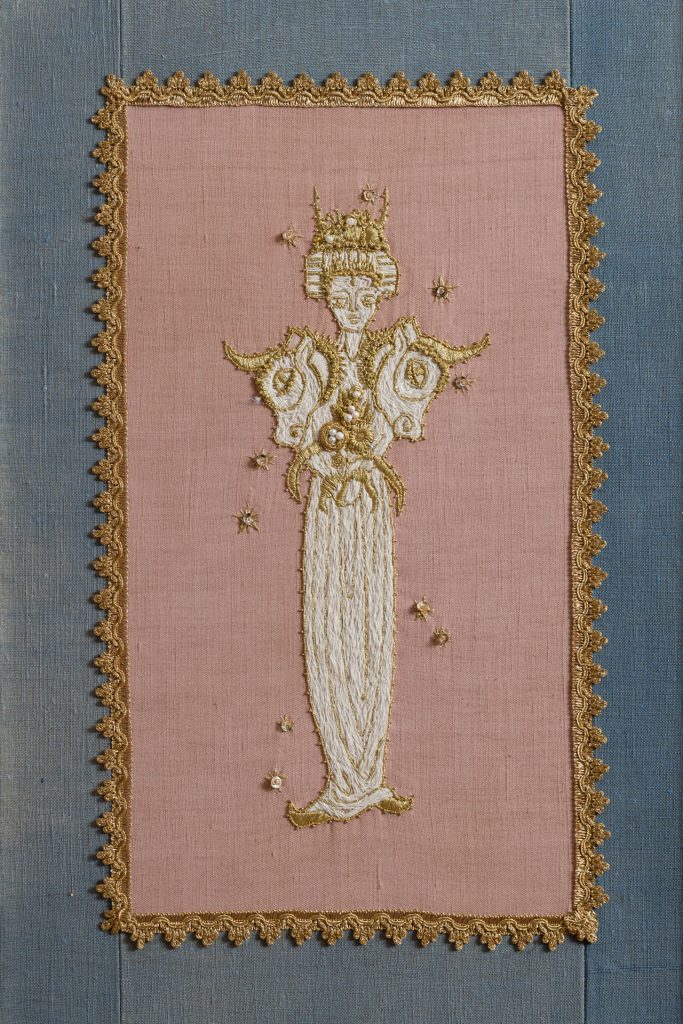
Il Toro riposa nella piacevolezza dei sensi. Inaugura il periodo di abbondanza della primavera inoltrata, così le volute delle numerose corna addosso alla donna mimano molteplici cornucopie.
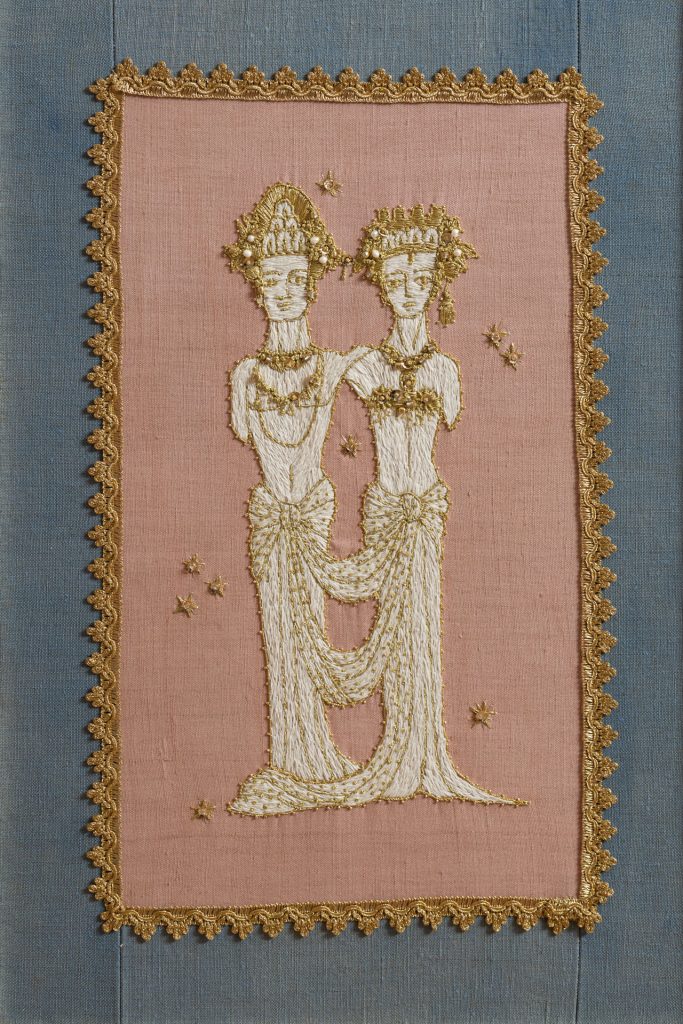
I Gemelli si mostrano diversi nell’aspetto ma uniti da un particolarissimo copricapo che suggerisce la qualità mentale del segno, governato da Mercurio, signore dell’intelletto.
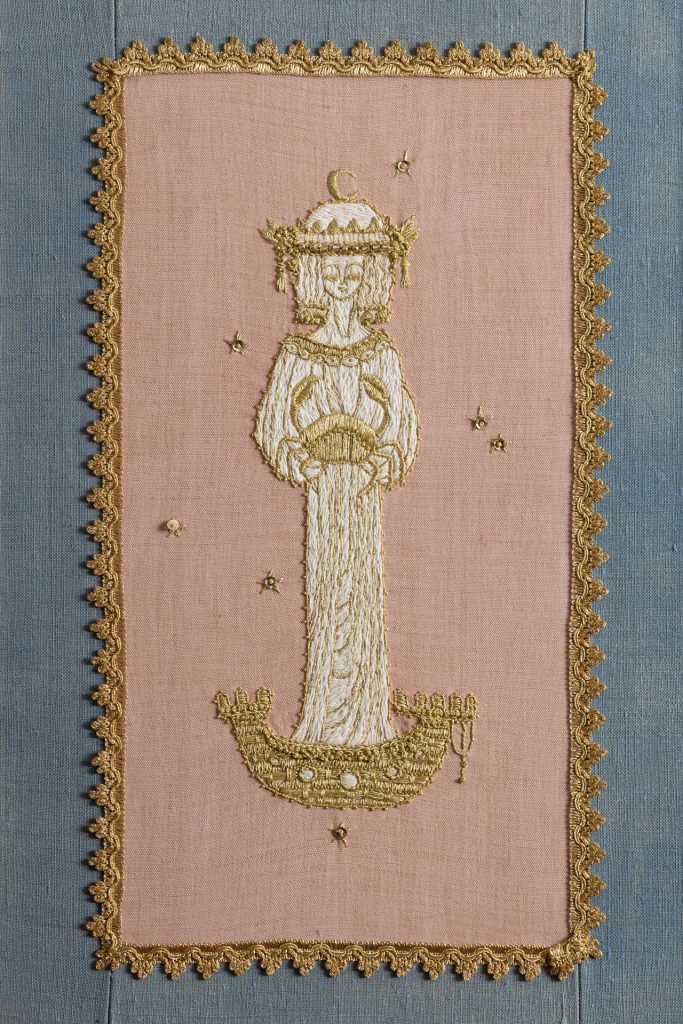
Il Cancro, unico con gli occhi chiusi, sembra cullarsi nelle onde dei suoi capelli, naviga su una barchetta minuta nel suo mondo lunare, interiore, fatto di affetti e cura.
Aries, a fire sign, is active, forcefully initiating the natural year. The sword wielded by the warrior wearing a ram’s helmet echoes the upward thrust of the first shoots of March.
Taurus rests in the pleasures of the senses. It heralds the season of abundance in late spring; accordingly, the many curling horns adorning the female figure evoke an array of cornucopias.
Gemini appears as two distinct figures, different in appearance yet joined by an extraordinary shared headdress that alludes to the sign’s intellectual nature. Gemini is ruled by Mercury, lord of reason and communication.
Cancer, the only figure with closed eyes, seems to cradle itself in the waves of its own hair. It sails a tiny boat through its lunar, inward world—a realm of affection, care, and emotional memory.
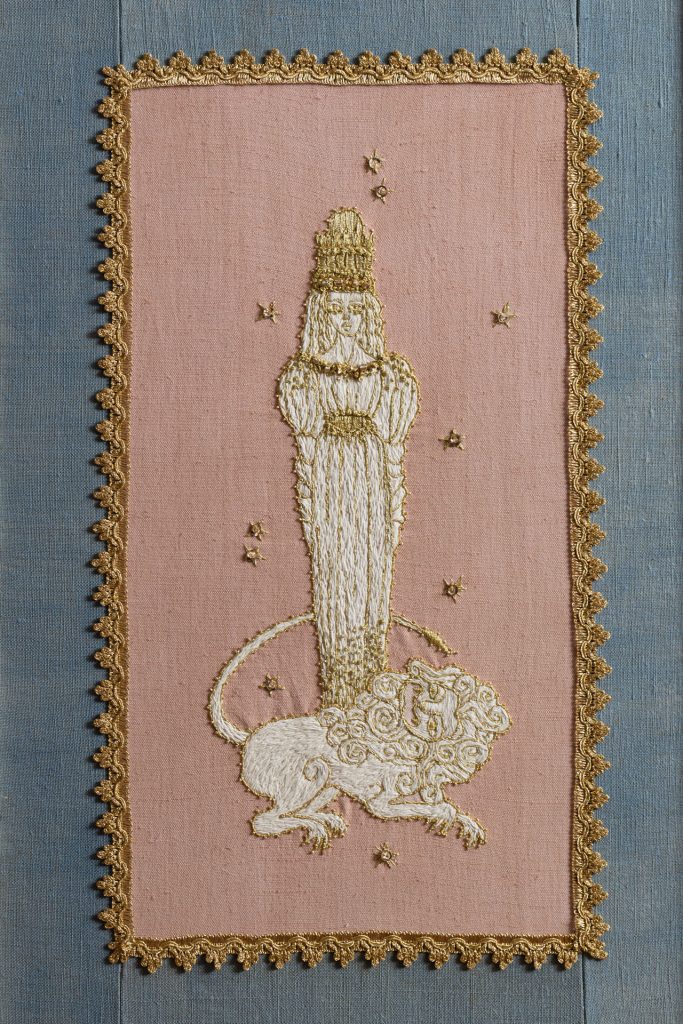
Il Leone, associato al sole e al suo ruolo di re dei cieli, chiede forza ponderata, quella suggerita dall’omonimo arcano maggiore dei Tarocchi, di cui riprende l’iconografia.
La Vergine indica l’analisi realistica della situazione e la consapevolezza di una raggiunta preparazione. Sembra una Cerere parca, con fattezze egizie, pronta all’autunno.
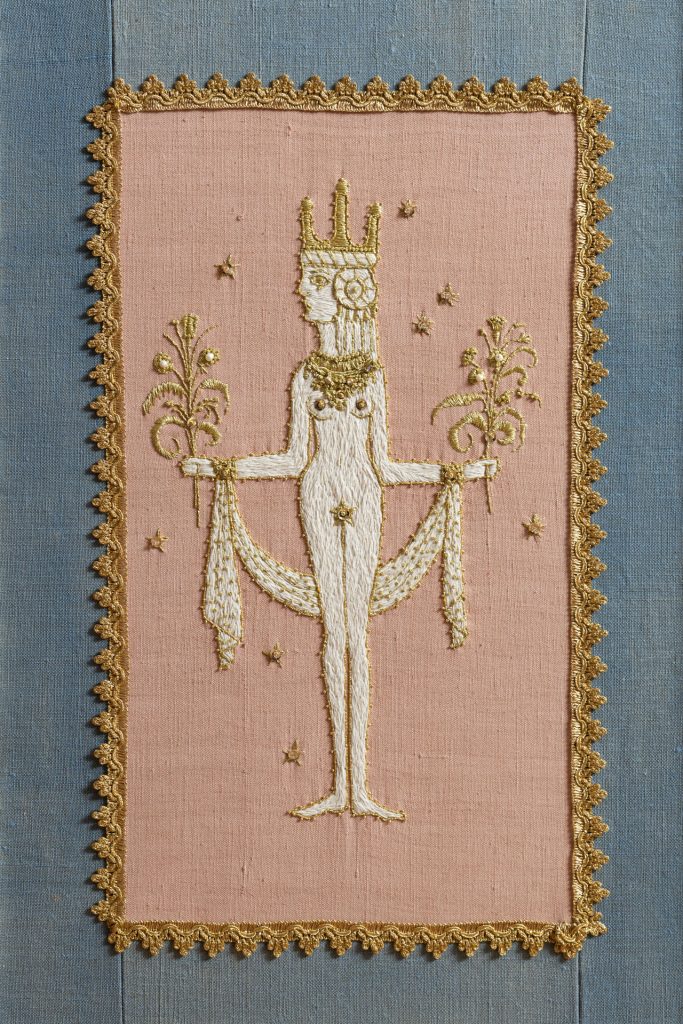
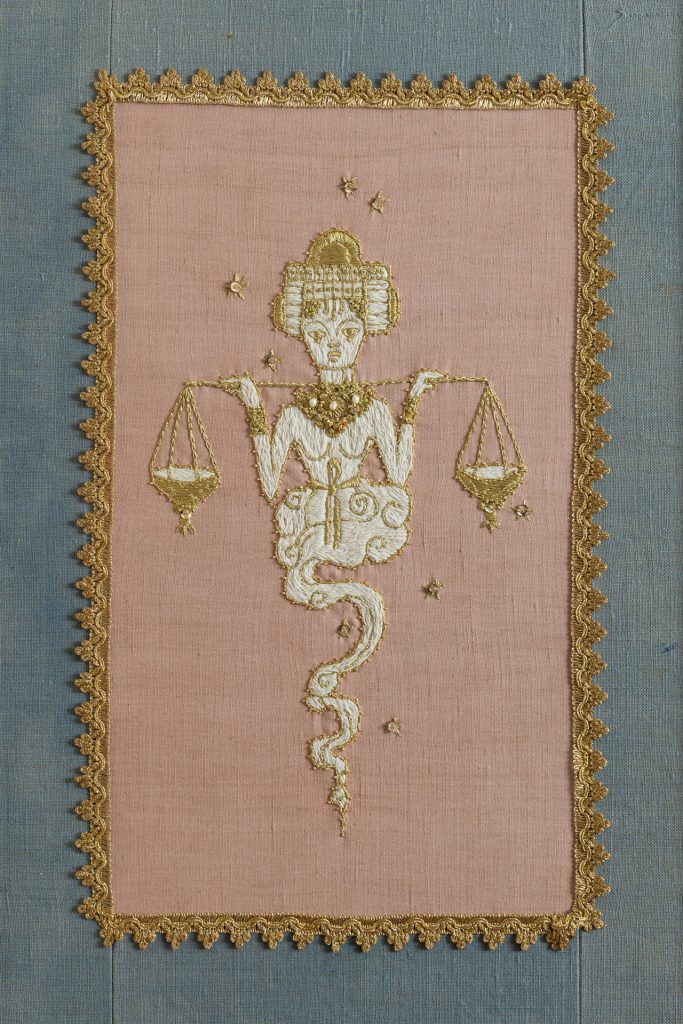
La Bilancia sta su una nuvola per guardare dall’alto le dispute terrestri e raggiungere una calma super partes, necessaria per pesare due opposti punti di vista.
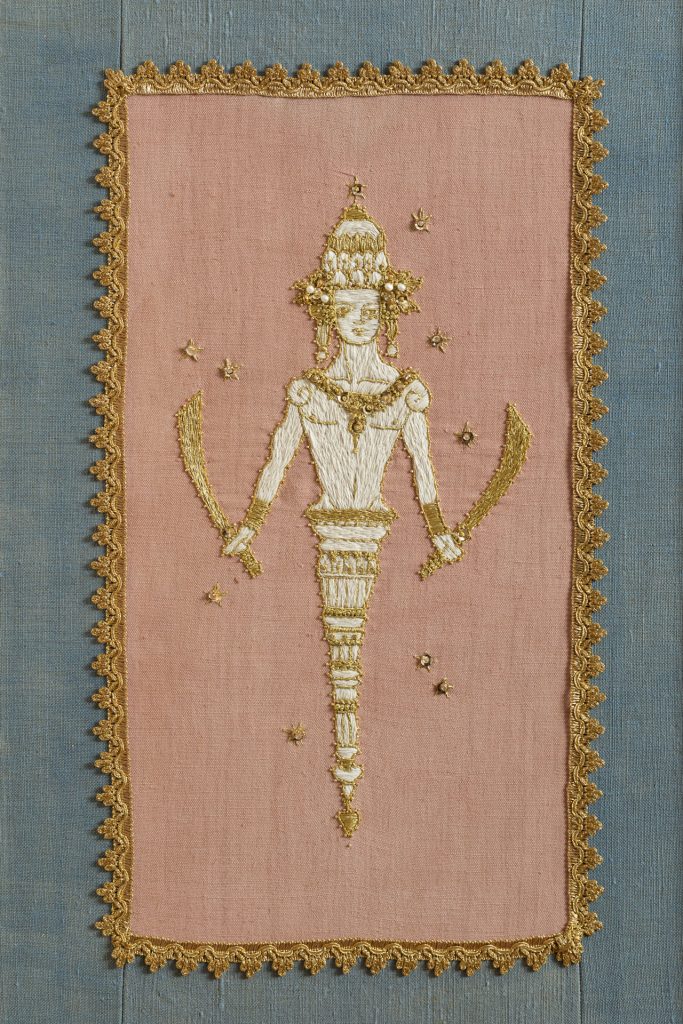
Lo Scorpione racconta di un’energia carismatica, densa, potente che può essere letale, soprattutto per sé stesso. Le chele sono perciò immaginate come due scimitarre turche.
Leo, associated with the Sun and its sovereign place in the heavens, calls for measured strength: the kind embodied by the eponymous Major Arcana of the Tarot, whose iconography this figure consciously recalls.
Virgo represents the realistic analysis of circumstances and the awareness born of attained knowledge. She resembles an austere Ceres with Egyptian features, poised to welcome the arrival of autumn.
Libra stands upon a cloud, surveying earthly disputes from above in order to attain an impartial calm—the balanced perspective required to weigh opposing points of view.
Scorpio embodies a charismatic, concentrated, and powerful energy that can prove lethal, above all to itself. Its pincers are therefore imagined as a pair of Ottoman scimitars.
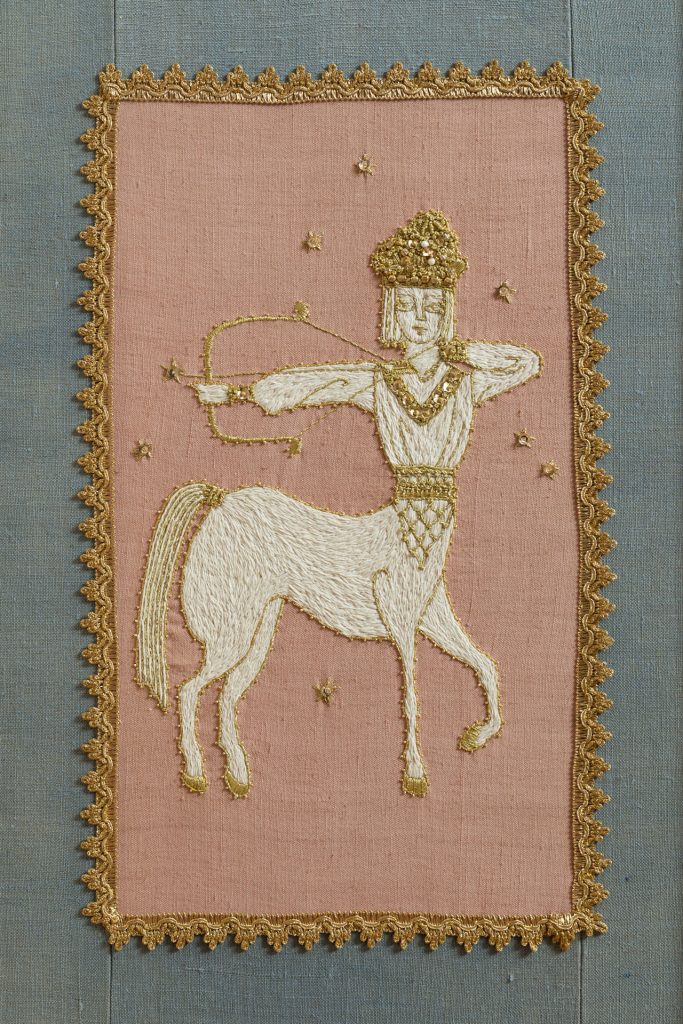
Il Sagittario concentra lo sforzo di calibrare, far coabitare l’istinto e la ragione, l’impulso e il sentimento umano. È questo il bersaglio cui mira, sempre lontano, ogni volta da mettere a fuoco.
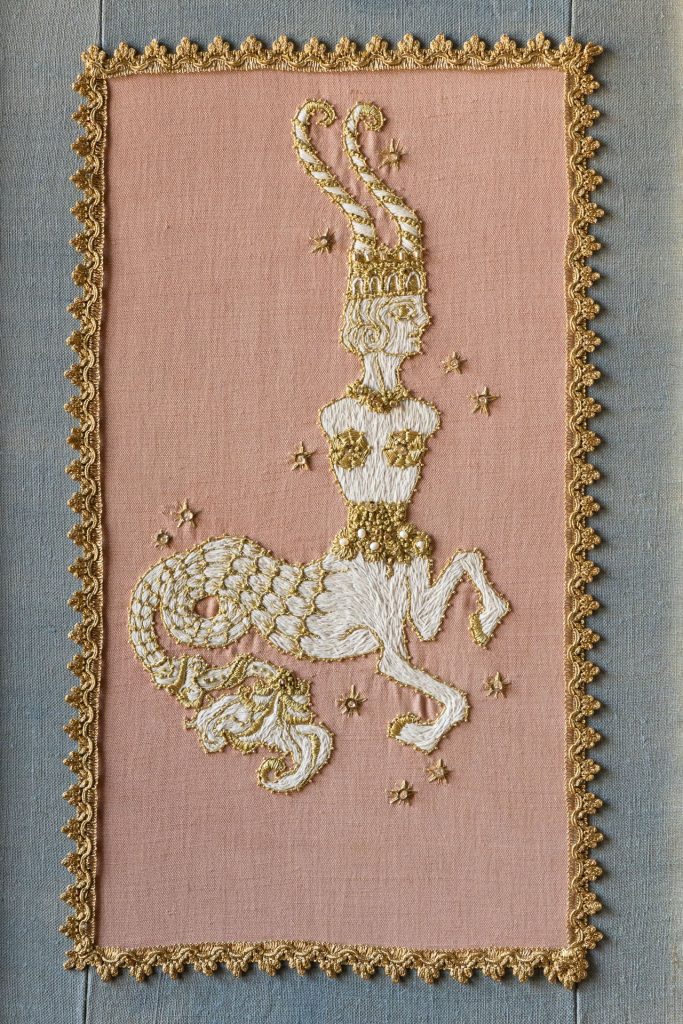
Il Capricorno è una figura ibrida in cui convivono natura caprina e marina. Avanza sicuro alla guida di un corteo immaginario, e la sua fusciacca metallica cita il rumore delle campane al collo dei becchi.
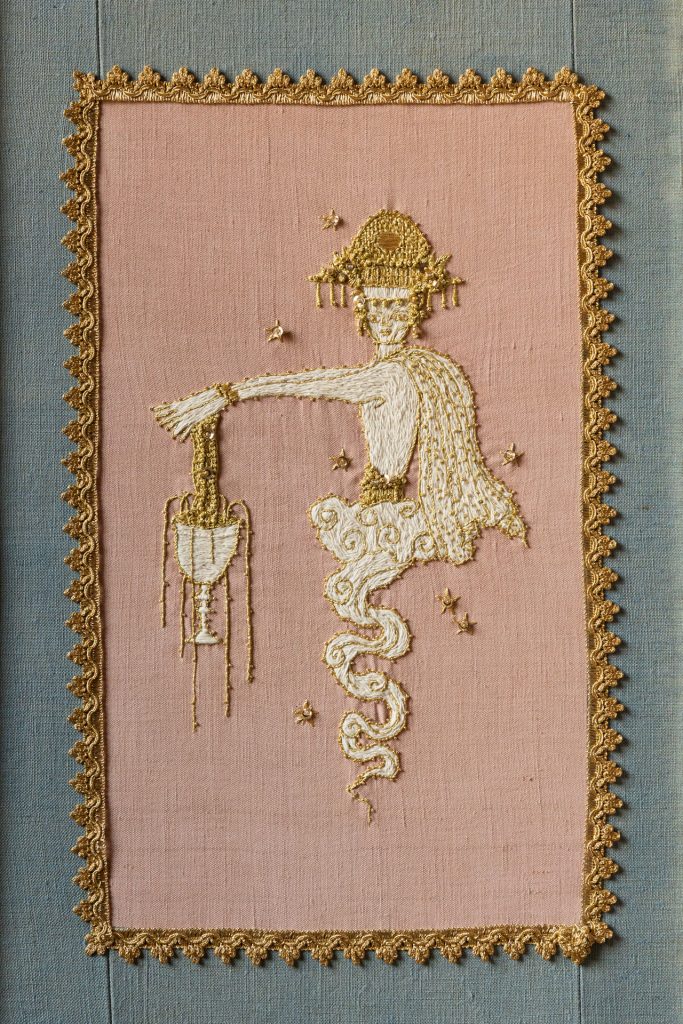
L’Acquario assomiglia ai Jinn, i geni delle tradizioni popolari islamiche. Fa emergere l’acqua dalla fontana, che come lui levita. È una figura che evoca poteri super umani, capaci di innovazioni rivoluzionarie.
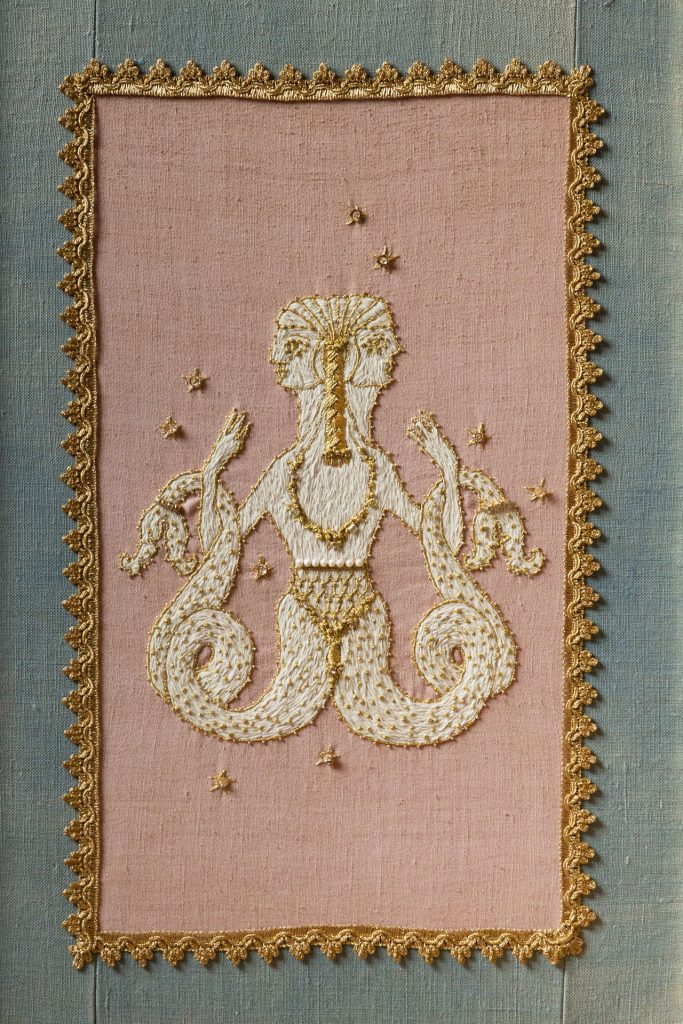
I Pesci assorbono gli attributi del Giano bifronte e della sirena bicaudata . Vanno in due direzioni apparentemente opposte, ma la treccia che li lega e un cerchio sul petto svelano il loro scopo: ritrovare l’unità nella frammentazione e pluralità della vita.
La via del segno che chiude il ciclo è trascendere, conducendo l’intera ruota zodiacale verso inaspettati mari interiori.
Sagittarius embodies the effort to reconcile instinct and reason, impulse and human feeling. This is the distant target at which it continually aims, always just beyond reach, always demanding renewed focus.
Capricorn is a hybrid being in whom goat and sea creature coexist. It advances with quiet assurance at the head of an imaginary procession, while its metallic sash evokes the ringing of the bells traditionally hung around the necks of mountain goats.
Aquarius recalls the Jinn of Islamic folklore. Water rises from the fountain, levitating just as the figure itself does. It evokes superhuman powers capable of bringing about radical innovation and transformation.
Pisces draws upon the attributes of the two-faced Janus and the double-tailed mermaid. The two figures move in seemingly opposite directions, yet the braid that binds them together and the circle upon their chests reveal their shared purpose: to rediscover unity within the fragmentation and plurality of life.
The path of the sign that completes the zodiacal cycle is one of transcendence, leading the entire zodiacal wheel toward unexpected inner seas.
a cura di Lavinia Pini
Astra // Codex si presenta come un seducente compendio astrologico: dodici pannelli ritraggono un segno zodiacale.
Daniele Davitti combina i punti di lavorazione tipici del suo stile –punto pieno, raso, cordoncino e nodo francese – per ricamare a mano con filo bianco e dorato figure elaborate e splendide, rese ancora più luminose da perle di fiume, micro perle di vetro e cristalli, che spiccano su uno sfondo di tessuti d’epoca tinti artigianalmente.
Così come il titolo della serie, la resa dei dodici segni è evocativa, poetica, rivisitata. Vi è licenza di reinventare un linguaggio, verbale e figurativo.
Il cielo “astra” si fa codice, trasmette un messaggio ampio del quale le costellazioni sono il lessico. Davitti le trascrive su tela di lino e così facendo le porta nel dominio terrestre, dove le energie cosmiche assumono una forma finita e si condensano in simboli, divenendo a loro volta elementi di un “codex” che racconta un personale zodiaco immaginario.
La coscienza umana, che da millenni rivolge lo sguardo al firmamento, mossa dal desiderio di scorgervi una guida, è dunque il luogo dell’incontro stellare e terreno. In omaggio ad essa tutti i personaggi di Davitti si fanno antropomorfi.
Ispirato dal legame profondo tra Firenze e gli studi celesti, l’artista guarda alla tradizione, sia astrologica che storico artistica. Ogni figura nasce da un’opera d’arte presente in città ed è plasmata mescolando elementi e stili propri dei luoghi che nel tempo hanno contribuito a forgiare la disciplina astrologica: gli occhi hanno tagli mesopotamici, la ieraticità rimanda alle icone bizantine, la longilineità dei corpi al canone egizio. Addosso a queste figure troviamo babush arabe, abiti medioevali, toghe greche. Così i protagonisti delle tele si allontanano da raffigurazioni stereotipate. Davitti crea un temperamento per ogni segno, sa infondere energia tipica e archetipica a ciascuno e al contempo sa renderlo più vicino, meno iconico, più umano. Coinvolge in una narrazione visiva che si concentra in dodici immagini indipendenti, che solo in un secondo momento saranno unite tra loro dando vita a un paravento zodiacale.
Ogni costellazione crea uno spazio in cui meditare.
Curated by Lavinia Pini
Astra // Codex presents itself as an alluring astrological compendium: twelve panels, each portraying one of the zodiac signs.
Daniele Davitti combines the signature embroidery techniques that define his artistic practice—satin stitch, long and short stitch, stem stitch, and French knots—to hand-embroider intricate and luminous figures using white and gold thread. These are further enriched with freshwater pearls, micro glass beads, and crystals, which stand out against backgrounds of antique fabrics that have been hand-dyed using traditional methods.
Like the title of the series itself, the interpretation of the twelve zodiac signs is evocative, poetic, and reimagined. Here, both visual and verbal language are granted the freedom to be reinvented.
The heavens—astra—become a code, conveying a vast message in which the constellations form its vocabulary. Davitti transcribes them onto linen canvas, bringing them into the earthly realm, where cosmic energies take on finite form and crystallize into symbols, themselves becoming elements of a codex that narrates a deeply personal imaginary zodiac.
Human consciousness, which for millennia has turned its gaze toward the stars in search of guidance, becomes the meeting place between the celestial and the terrestrial. In homage to this enduring impulse, all of Davitti’s figures take on anthropomorphic form.
Inspired by the profound connection between Florence and the study of the heavens, the artist draws upon both astrological tradition and art history. Each figure originates from a work of art found in the city and is shaped through a synthesis of elements and styles drawn from the cultures that, over time, contributed to the development of astrological thought: the eyes recall Mesopotamian imagery, the solemnity evokes Byzantine icons, and the elongated proportions of the bodies echo the Egyptian canon. These figures are adorned with Arab babouches, medieval garments, and Greek togas. In this way, the protagonists of the works move beyond stereotypical representations. Davitti creates a distinct temperament for each zodiac sign, imbuing every one with its characteristic and archetypal energy while making it more intimate, less iconic, and profoundly human.
The artist invites viewers into a visual narrative articulated through twelve autonomous images, which are ultimately brought together to form a zodiac screen.
Each constellation creates a space for contemplation.